



Private Cloud Desktops for Finance & Accounting Teams

Private Cloud Desktops for Finance and Accounting
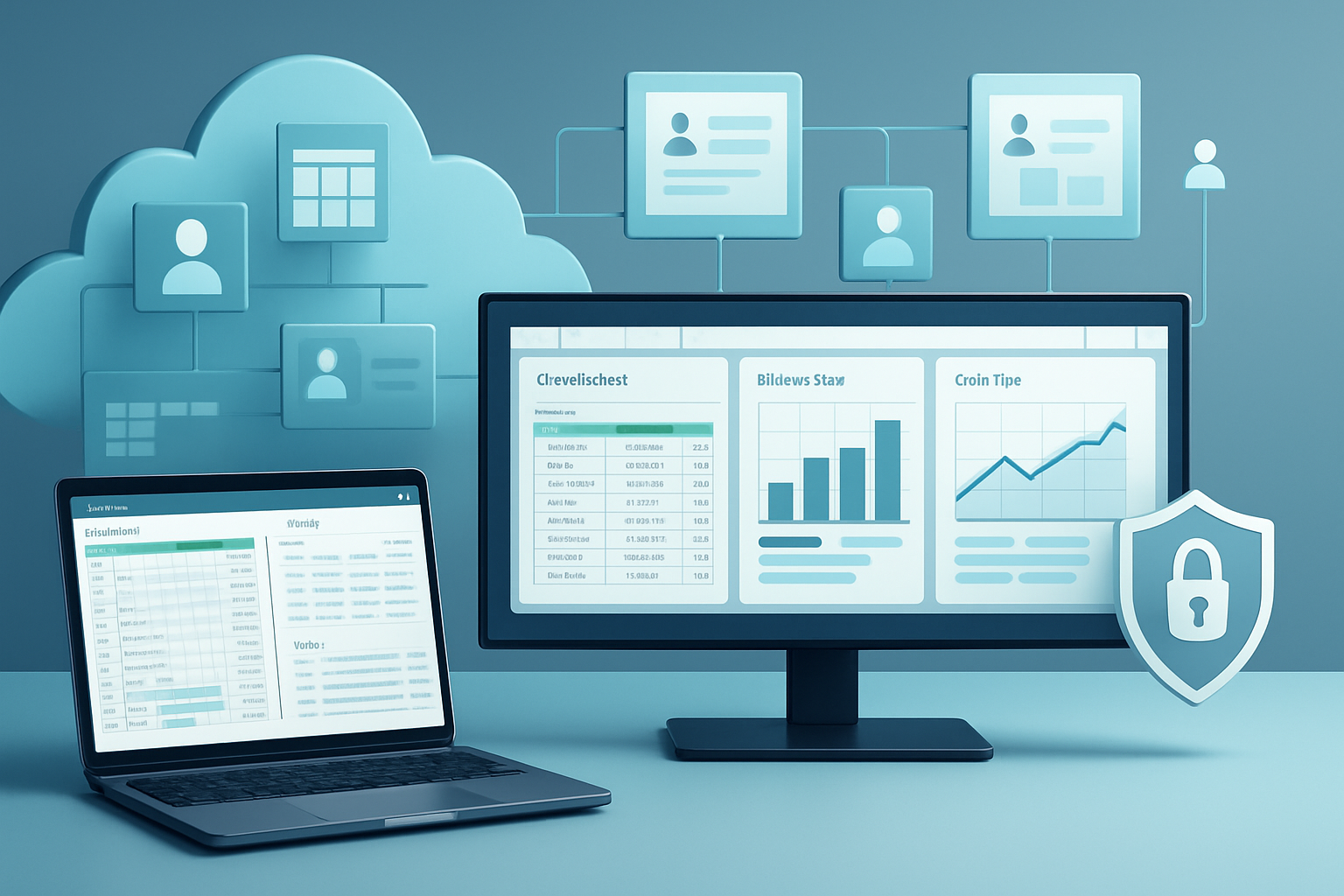
The surprising truth is that most finance teams do not move to VDI for cost first. They move for control. Private cloud desktops keep sensitive ledgers, payroll exports, and trial balances inside a dedicated environment that your organization governs end to end. Access is remote, the data is not. That distinction changes the risk equation. We see it daily. A controller loses a laptop on a train. No panic, because nothing lived locally and access was locked within minutes. In parallel, audit pulls a full session log and proves who touched what. Private cloud desktops for finance and accounting answer the immediate search: tighter security and compliance, higher productivity for distributed teams, plus elastic capacity for quarter-end and tax season without buying hardware that sits idle the rest of the year.
What private cloud desktops deliver to finance
Private cloud means resources dedicated to one organization. No noisy neighbors, predictable performance, and direct control over data governance. With VDI for finance, accountants and analysts connect to virtual desktops hosted in your private data center or a single-tenant environment. Access works from any device, policy decides what is allowed.
Key private cloud benefits for finance and accounting teams:
- Security and control. Data stays in the financial services cloud you manage. Screens stream, files do not move.
- Regulatory compliance. Controls map cleanly to PCI DSS 4.0, SOX 404, GLBA, GDPR, and CCPA.
- Cloud scalability. Burst non persistent desktops during close or tax season, then scale back.
- Business continuity planning. Centralized recovery protects critical apps like ERP, AP automation, and close management tools.
- DaaS for accounting options. Managed private offerings remove day to day overhead while preserving isolation.
Brief example from a recent rollout. A 220 person accounting firm consolidated five regional offices into private VDI. They standardized images with FSLogix profiles, enabled MFA with Okta, and restricted download for PII folders. Result, a 27 percent faster month end close, 38 percent fewer support tickets related to version conflicts, and RTO improved from 24 hours to 2 hours for desktop access. Independent research aligns, firms using virtual desktops report about a 30 percent productivity lift for remote finance staff . Julie Watson captured the mindset well, "The private cloud is not just about security; it is about enabling finance teams to innovate while keeping compliance in check" .
Where it fits best
Private cloud desktops shine when you manage sensitive datasets, need strict change control, or operate in jurisdictions with data residency rules. They also help when analysts use heavy Excel models, Power BI with GPU, or legacy finance apps that dislike internet round trips.
Security, compliance, and real time oversight
Financial data security depends on layered controls, not a single product. In a well built private VDI, we typically deploy MFA, conditional access, least privilege, and role based images. Protocols use TLS 1.2 or higher with FIPS validated crypto. Data at rest is encrypted with AES 256 and keys stored in HSM backed services. Screen watermarking, clipboard rules, and print controls close common exfiltration paths.
Regulatory compliance is easier when controls are centralized. Private cloud desktops help meet PCI DSS 4.0 requirements for network segmentation, centralized logging, and strong authentication. They support SOX 404 through change management, golden images, and tight segregation of duties. For GLBA, GDPR, and CCPA, you get clearer data lineage and audit trails for subject access requests.
Real time oversight matters now that auditors expect it. We integrate SIEM tools like Splunk, Microsoft Sentinel, or Elastic to capture session events, file access, and admin changes. Continuous controls monitoring with ServiceNow GRC or MetricStream tracks evidence automatically. Vulnerability management runs with Tenable or Qualys on the master images, then seals updates through a controlled release. For microsegmentation, NSX or Illumio confines east west traffic, so a compromise in one desktop pool does not reach your general ledger. Companies consistently cite security as the top driver for private cloud adoption, with 22 percent naming it the main reason . The payoff extends to flexibility too. As Ace Cloud Hosting noted, private cloud desktops keep sensitive data protected while enabling operational agility .
Compliance reporting without chaos
Build reports that map directly to control frameworks. Examples, PCI requirement 8 evidence from identity logs, SOX change records from your image pipeline, GDPR access logs tied to finance data shares. Automate monthly snapshots so audit pulls instead of interrupts.
Costs, vendors, and an implementation playbook
Cost conversations need full lifecycle math. Private cloud solutions often reduce IT costs up to 40 percent over five years through centralized management, longer endpoint life, and right sized capacity . You also reduce breach exposure and downtime costs, which rarely appear in simple TCO spreadsheets.
Trusted vendor options for finance:
- VMware Horizon. Mature VDI stack, strong management, works well with NSX and vSAN.
- Citrix Virtual Apps and Desktops. Feature rich brokering, HDX protocol, granular policy control.
- Nutanix with AHV plus Frame or Citrix. Simple scale out, good for quick expansion.
- HPE GreenLake for VDI, Dell APEX. Opex models for private infrastructure with service SLAs.
- HP Anyware using PCoIP Ultra. High fidelity protocol for sensitive data scenarios.
- Parallels RAS with Leostream. Cost efficient for midmarket, flexible broker and protocol choices.
- Ace Cloud Hosting. Private DaaS tailored to accounting applications .
Common challenges and our field fixes:
- App licensing in VDI. Validate concurrent versus named licenses, check terms for virtual use.
- Peripherals. Test scanners and check printers with USB redirection or native drivers.
- Performance. Size CPU and memory for Excel macros, consider GPUs for Power BI.
- Identity. Integrate SSO with Okta or Entra ID, enforce MFA for privileged roles.
- Change control. Treat images like code, promote through dev, test, prod, with rollback.
Implementation playbook, kept practical:
- Assess workloads and data classification. Map users to pools, list apps and dependencies.
- Choose the broker and protocol. Align with security, performance, and skill sets.
- Pilot 10 to 30 users across roles. Measure sign in, app launch, and task times.
- Harden security baselines. Apply CIS benchmarks, enable logging, tune DLP.
- Plan DR. Define RTO and RPO, replicate images, run a live failover test.
- Train users. Short sessions on drive mapping, data handling, and support paths.
Practical next steps for finance leaders
Start with a risk and readiness assessment, then a focused pilot tied to a real deadline such as quarter end. Organizations that work with specialists often compress timelines and avoid hidden licensing traps. The goal is simple. Give finance secure, fast virtual desktops that stand up to audit and keep the business running during disruptions.
Frequently Asked Questions
Q: What are the biggest benefits for finance and accounting?
Security, compliance, and productivity gains. Private cloud desktops centralize data, enforce controls, and standardize toolsets. Finance teams work faster during close, while audit gets complete logs. Elastic scaling covers tax season, then contracts to save cost without stranding hardware.
Q: How do private cloud desktops improve financial data security?
They keep data inside a controlled environment. Virtual desktops stream pixels, not files, and apply MFA, encryption, and DLP policy consistently. Microsegmentation and SIEM monitoring reduce blast radius, while golden images and patch pipelines remove drift that attackers exploit.
Q: What do they cost compared to public cloud VDI?
Private often wins on predictable workloads. Dedicated capacity avoids egress fees and noisy neighbors, and five year TCO can drop up to 40 percent. Use a pilot to measure density per host, then right size pools. Include licensing, storage, GPUs, and DR in your model.
Q: Which vendors are trusted for finance VDI deployments?
Citrix and VMware lead enterprise VDI. Nutanix with AHV simplifies scale, while HPE GreenLake and Dell APEX provide opex private stacks. HP Anyware fits secure protocol needs. For accounting centric DaaS, providers like Ace Cloud Hosting tailor images and compliance reporting.