



Remote Collaboration for Architects and Engineers Guide

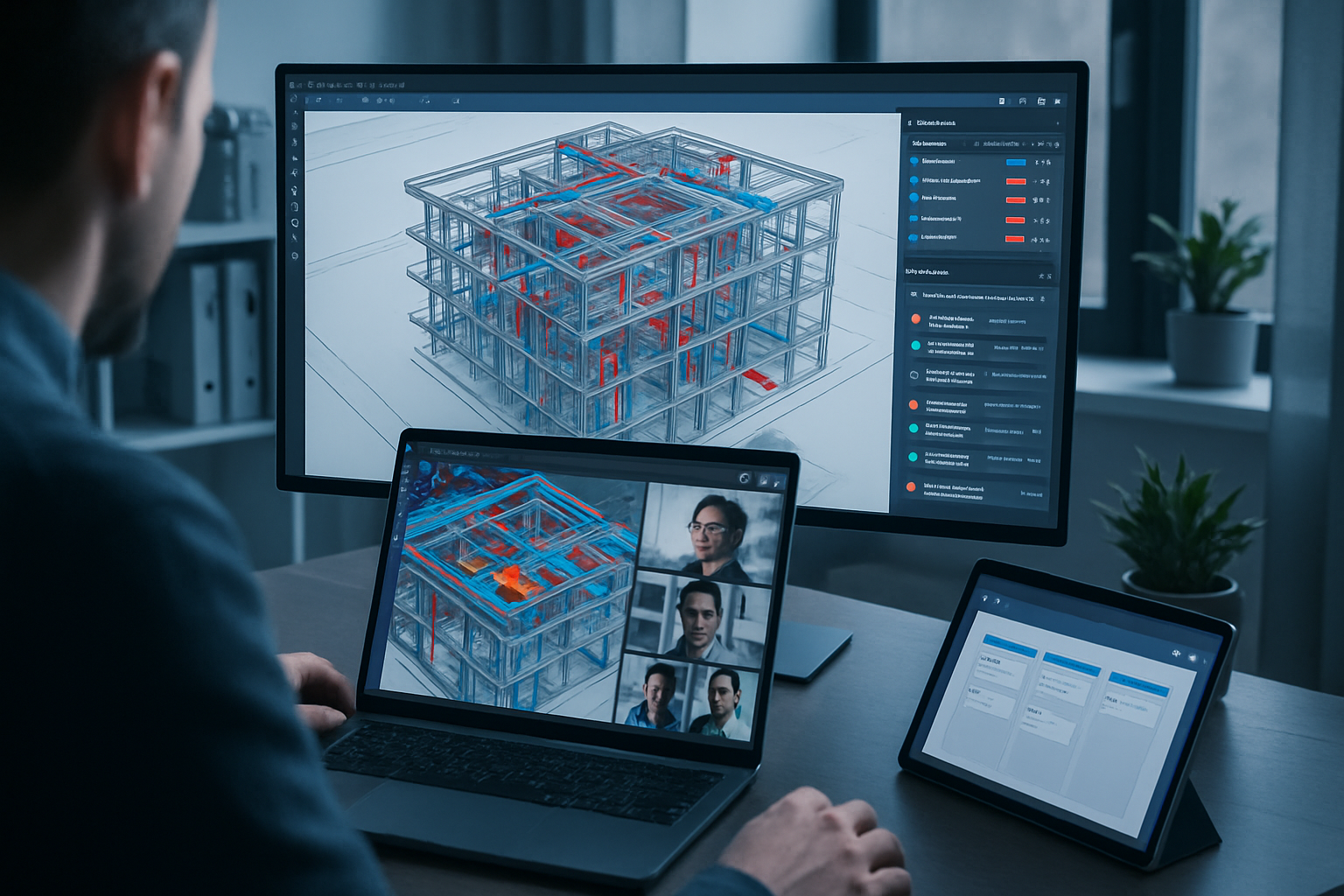
Remote Collaboration for Architects and Engineers
Model coordination across time zones, version control on large BIM files, and design decisions that stall in email. These are the friction points we hear most from architects and engineers. The good news is measurable upside. Seventy percent of firms reported better collaboration during remote work due to digital tools, and teams using BIM saw a 30 percent efficiency bump . The myth that remote work cuts productivity does not hold. Most design leads see faster cycles when communication is structured and the tech stack fits AEC workflows. What matters is process clarity. Pick a common data environment, define who owns what in the model, and run short, purposeful virtual meetings with pre-reads. Remote collaboration is not a downgrade from the studio. It is different. Eighty‑five percent of AEC employees expect remote options to stay . Teams that adapt culture and workflow outperform, onsite or off.
The real challenges: cohesion, clarity, and culture
Remote collaboration breaks when roles blur or decisions wander. We have seen small ambiguities in model ownership create big delays. Fix it with explicit design authority, clear gates, and a shared decision log.
Team cohesion without the studio walls
Cohesion depends on cadence. Daily 10 minute standups, weekly coordination reviews, and a monthly retrospective keep momentum. Rotate facilitators so disciplines share airtime. Use cameras for critical design reviews, audio for routine check‑ins to reduce fatigue. Celebrate small wins in channel to maintain morale.
Meeting preparation beats meeting length
Remote time is unforgiving. As Marco Teofili said, we need to spend more time preparing for these meetings in advance . Send a two page pre‑read, list decisions required, attach model viewpoints. Limit meetings to decisions, not discovery.
Communication strategies and psychological safety
Use named channels per workstream. Document norms for response time, drawing markups, and issue tagging. Encourage questions in-thread to keep context. A simple practice helps: the designer states intent, the reviewer responds with risks and alternatives. As Francesco Marinelli noted, digital collaboration takes us further in relaying information when the channel is structured.
Tools that actually work: BIM, cloud, VR and AR
Pick tools that respect AEC realities, not generic office work. Start with your BIM backbone, then layer real‑time communication, markups, and a traceable CDE.
BIM and the CDE
Autodesk Construction Cloud or BIM 360 for Revit, ProjectWise for Bentley, Trimble Connect for Tekla and SketchUp, and Solibri for QA/QC. Use a single source of truth aligned to ISO 19650 naming and approvals. Define LOIN explicitly, not just LOD. Enforce model federation schedules and publish sets with revision metadata.
Virtual meetings and digital whiteboards
Microsoft Teams or Zoom for virtual meetings with persistent channels. Miro works for design charrettes and service diagrams. Revizto or BIMcollab for issue tracking with pinned viewpoints. Keep cloud‑based collaboration storage inside the CDE. Generic sync tools can corrupt lock files and create silent conflicts on large RVT or IFC sets.
VR, AR, and immersive reviews
Enscape or Twinmotion for quick walkthroughs. Varjo or Meta headsets for higher fidelity, Hololens 2 or Magic Leap on site. IrisVR Prospect and The Wild support multiuser sessions. Use VR for stakeholder buy‑in and AR for clash triage in the field. Set viewing checkpoints so comments flow back into the issue tracker.
Security and data management essentials
Enable SSO and MFA on the CDE. Require role‑based access, audit logs, encryption at rest and in transit, and data residency that matches client requirements. ISO 27001 or SOC 2 vendors simplify approvals. Avoid sharing models by email. Use expiring, permissioned links and watermark sensitive PDFs.
Workflow optimization, timelines, and interdisciplinary coordination
Remote collaboration can shorten timelines if asynchronous work is respected. Where it slips is decision latency. Close the loop with predictable cycles and visible blockers.
Project management that keeps pace
Use a lightweight Kanban in Jira, Asana, or Planner. Columns map to AEC phases. Every card links to a model view or sheet. Weekly 30 minute portfolio review surfaces cross‑project risks. Teams using BIM report 30 percent efficiency gains during remote work when these loops are tight .
Interdisciplinary coordination that sticks
Run a weekly federated model check in Navisworks or Solibri, then a targeted clash session. Assign a single coordinator per discipline with authority to accept minor deviations. Publish a RACI so everyone knows who approves penetrations, openings, and equipment clearances.
A simple three step remote plan
Step 1. Define goals, scopes, and a CDE with ISO 19650 conventions. Step 2. Select tools, create accounts, enforce SSO, and train on issue workflows. Step 3. Schedule recurring virtual meetings for decisions, and track action items in the CDE, not email.
Practical next steps that reduce risk
Pilot on a contained package. One building core, one MEP riser, or a façade bay works well. Standardize naming, implement a CDE, and run two coordination cycles. Measure rework hours, decision cycle time, and clash count per week. Organizations that work with specialists typically compress adoption from months to 6 to 8 weeks through playbooks, training, and governance. If you need help rationalizing tools or aligning to client security requirements, a short assessment saves time and costly rework.
Frequently Asked Questions
Q: What are the best tools for remote collaboration in architecture and engineering?
Use a BIM‑centric stack with a secure CDE. Autodesk Construction Cloud, ProjectWise, Trimble Connect, and Solibri support disciplined workflows. Teams often add Revizto for issues, Miro for charrettes, and Teams or Zoom for meetings. Require SSO, MFA, and ISO 19650 naming to keep models coherent and traceable.
Q: How can architects and engineers maintain team cohesion while working remotely?
Set cadence, clarify roles, and create social touchpoints. Daily standups and a weekly retrospective stabilize rhythm. Rotate facilitators and publish decision logs to improve accountability. Add casual 15 minute coffee sessions twice monthly to maintain rapport. Cohesion rises when teams see progress, so visualize throughput with a simple Kanban.
Q: What challenges do teams face in remote collaboration and how to mitigate them?
Decision latency, unclear ownership, and file conflicts cause delays. Establish model ownership, approval gates, and a CDE with locking. Use issue trackers with viewpoints to remove ambiguity. Pre‑read packets reduce meeting time and raise quality. Monitor two metrics weekly, decision aging and rework hours, to intervene early.
Q: How does remote collaboration impact project timelines and quality?
It shortens cycles when processes are explicit. Asynchronous work trims waiting, and BIM improves coordination efficiency by about 30 percent . Quality rises with structured reviews. Use federated model checks each week, then focused clash sessions, to keep decisions moving and drawings consistent without extra meetings.
Q: What are best practices for virtual meetings among design teams?
Decide, do not discover, during virtual meetings. Send pre‑reads, list required decisions, and attach model views. Timebox to 25 or 50 minutes. Record outcomes in the CDE, not chat. Use VR or AR only when spatial judgment is needed. This keeps remote collaboration efficient and avoids meeting fatigue.